Financial District · New York
Things to Do in the Financial District: Best Spots on a Self-Guided Walking Tour
Where to go, what to skip
Rafaël · · 2 hours · ~1.5 miles · 10 stops
- 1. Castle Clinton
- 2. Bowling Green
- 3. Charging Bull
- 4. Fraunces Tavern
- 5. Wall Street and NYSE
- 6. 40 Wall Street
- 7. Federal Hall
- 8. Trinity Church
- 9. St. Paul's Chapel
- 10. National September 11 Memorial
The Financial District is where New York City keeps its oldest stories. This is the original settlement, the place where the city began in the 1620s. It’s also where some of the country’s most defining moments happened: George Washington took the oath of office here, Alexander Hamilton is buried here, and the September 11 attacks reshaped the skyline here.
The Financial District sits at the southern tip of Manhattan, bounded by the East River, the Hudson River, and roughly Chambers Street to the north. To the north is Tribeca, then SoHo; to the east is the South Street Seaport. This route stays inside the Financial District proper and connects the most worth-your-time spots on foot, in walking order.
Whether you’re visiting for the first time or you live here and want to see your neighborhood with fresh eyes, this walk covers the highlights that matter: the Charging Bull, Wall Street and the New York Stock Exchange, Federal Hall, Trinity Church, and the National September 11 Memorial.
The walk covers 10 stops across 1.5 miles. No rushed group tour, no bus that barely slows down. Just you, your pace, and the streets that made the city what it is.
Take this walk with audio narration →
At a Glance
- Distance: ~1.5 miles
- Time: 2 hours with stops (60 minutes walking only)
- Start: Castle Clinton in Battery Park (1 train at South Ferry, 4/5 at Bowling Green)
- End: National September 11 Memorial
- Best for: First-timers, history lovers, architecture fans, anyone who wants to walk without fighting crowds
- Best time: Weekday mornings for quiet; weekends to avoid office crowds
- Best season: Spring (April to June) or fall (September to November)
- Difficulty: Easy, mostly flat sidewalks
- What it covers: Colonial history, Revolutionary War sites, financial landmarks, September 11 history, church graveyards
1. Castle Clinton
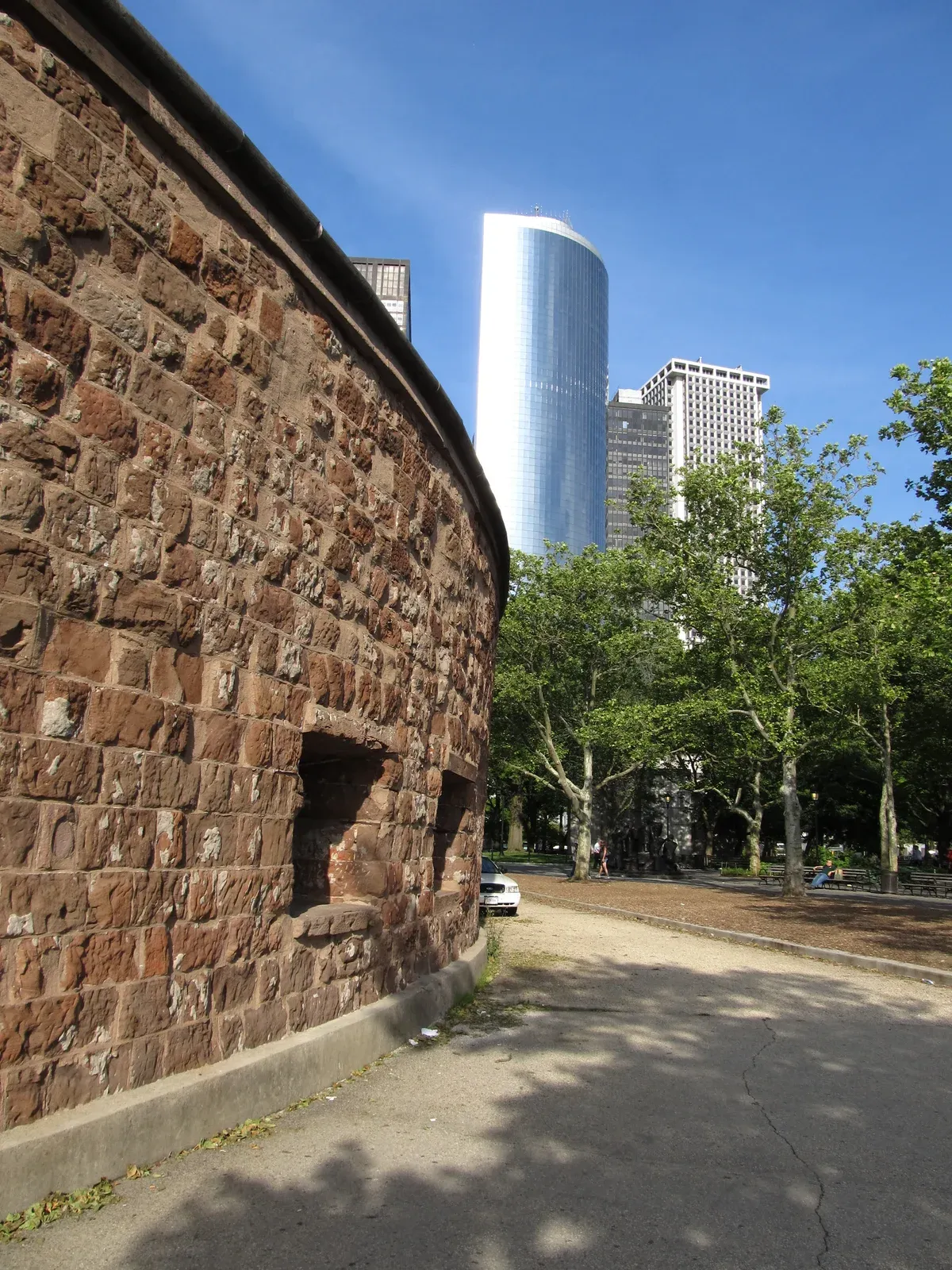
Start here, at the southern tip of Manhattan in Battery Park.
Castle Clinton was built as a fort between 1808 and 1811 to defend New York Harbor during the War of 1812. The fort never saw combat. Instead, it became a beer garden and entertainment venue in the 1820s, an immigrant processing station from 1855 to 1890 (before Ellis Island opened), and then the New York Aquarium from 1896 to 1941.
Today it’s a National Monument and the place where you buy ferry tickets to the Statue of Liberty and Ellis Island. The circular sandstone walls are original. Walk inside for a look at the fort’s layout, then walk north into the city.
2. Bowling Green
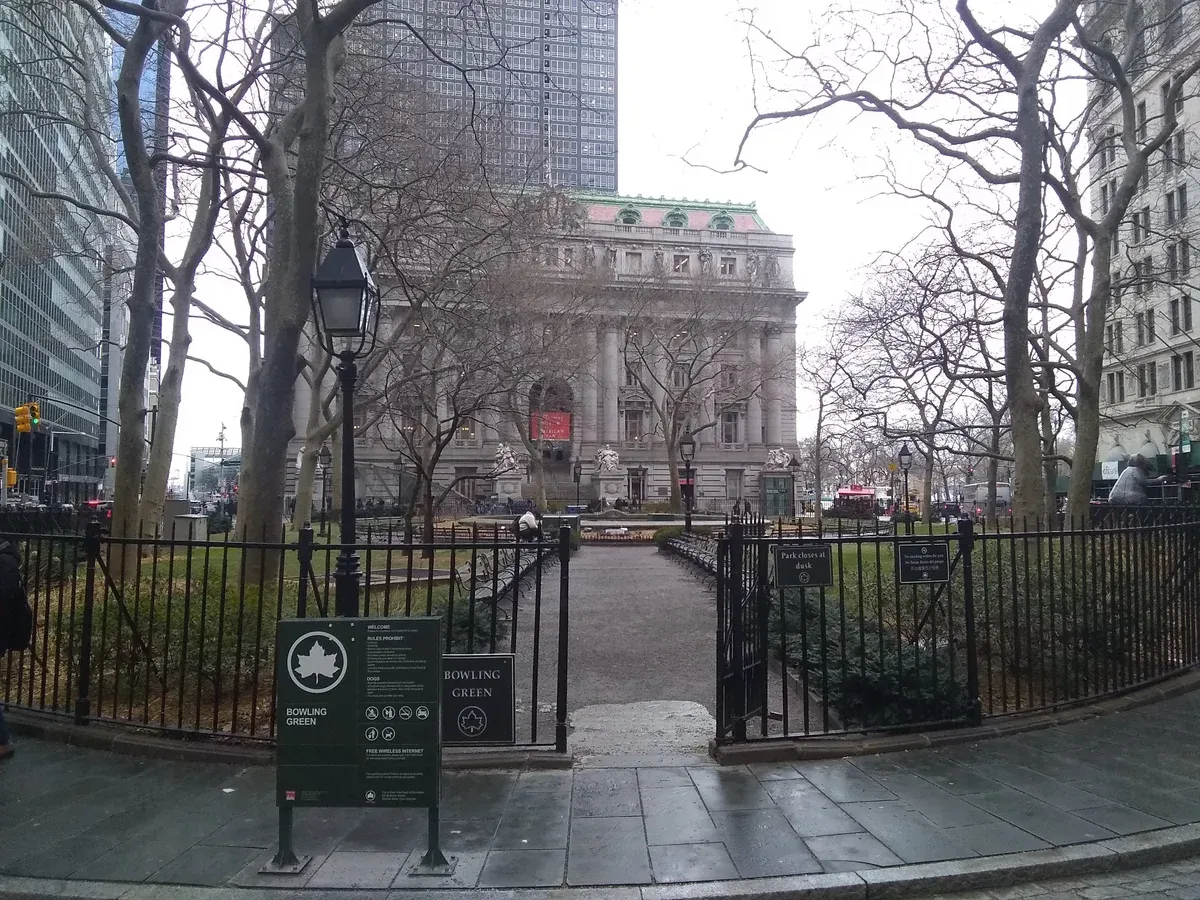
Walk north on State Street to Bowling Green, the small fenced park at the foot of Broadway.
Bowling Green is one of the oldest public parks in New York City, established in 1733. The iron fence around it dates to 1771 and is one of the few surviving pre-Revolutionary War structures in the city. Look closely at the fence posts: the crowns that once topped them were torn down by colonists on July 9, 1776, the same day a crowd toppled the statue of King George III that stood in the center of the park.
The park is small, oval, and usually full of tourists lining up to take photos with the Charging Bull, which is your next stop.
3. Charging Bull
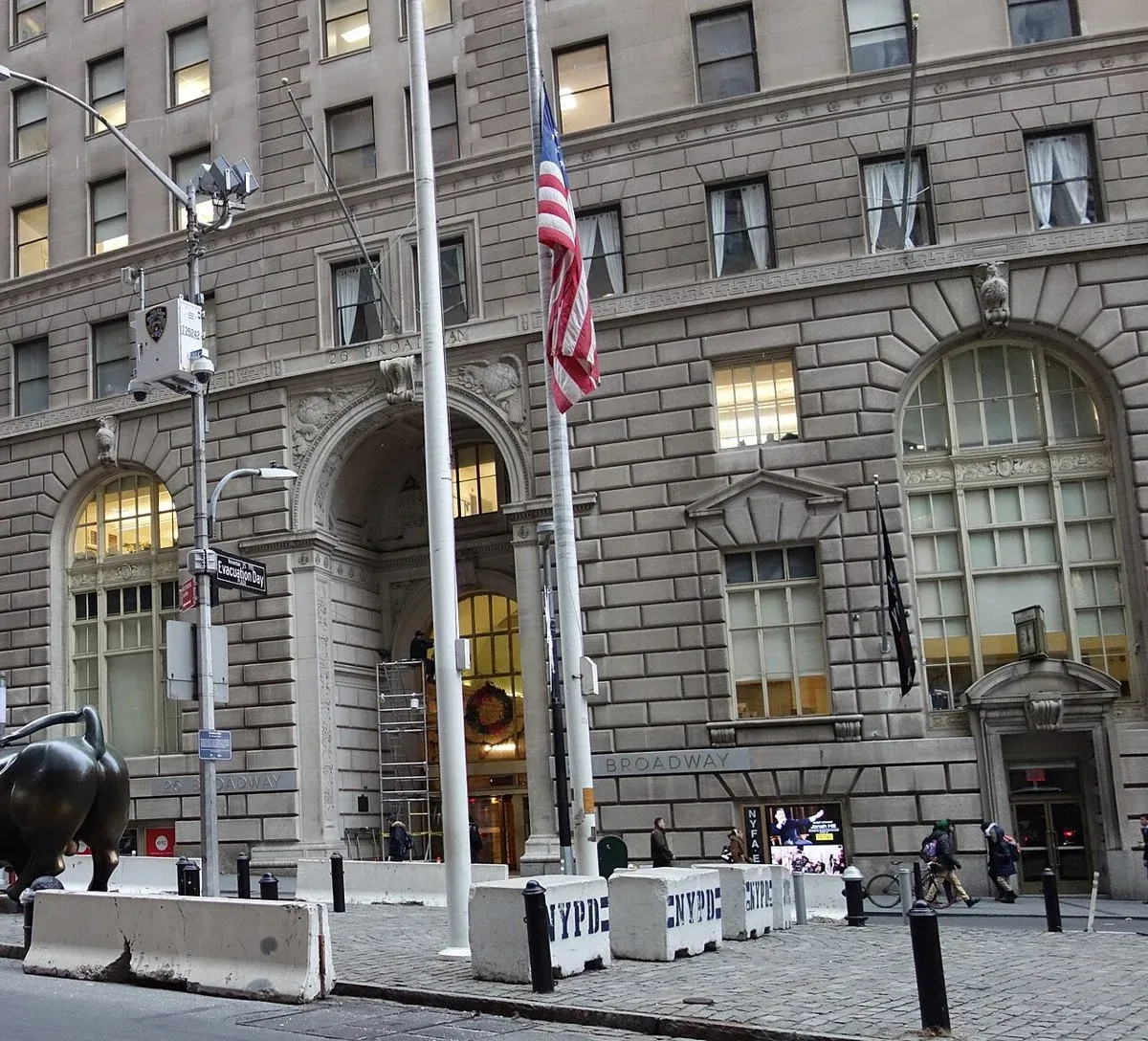
Walk north on Broadway to the Charging Bull, the bronze sculpture at the northern tip of Bowling Green.
The Charging Bull was created by Italian artist Arturo Di Modica and installed without permission in front of the New York Stock Exchange on December 15, 1989, two years after the 1987 stock market crash. The statue weighs 7,100 pounds and was meant as a symbol of American resilience and optimism.
The NYSE had it removed, but public outcry led the city to place it permanently at Bowling Green. The Fearless Girl statue, created by Kristen Visbal, was installed facing the bull in 2017 and later moved to its current location in front of the NYSE on Broad Street.
The bull is one of the most photographed statues in the city. The line to take a photo with it can be long on weekends. Come early or skip the photo and keep walking.
4. Fraunces Tavern
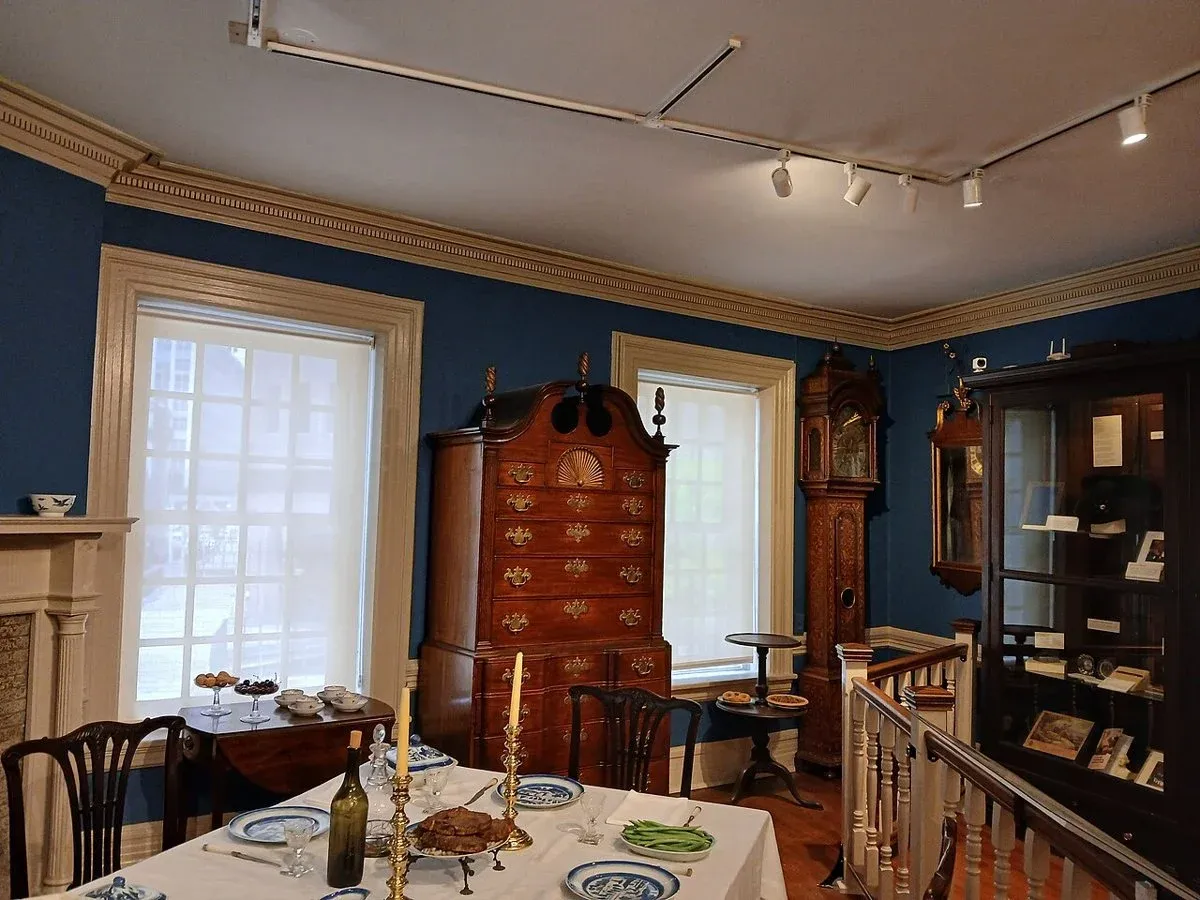
Walk east on Pearl Street to 54 Pearl Street at the corner of Broad Street.
Fraunces Tavern is a brick building that dates to 1719, making it one of the oldest structures in Manhattan. It was purchased by Samuel Fraunces in 1762 and operated as a tavern and meeting place.
On December 4, 1783, George Washington hosted a farewell dinner here for his officers after the British evacuation of New York. The Long Room on the second floor, where the dinner took place, has been preserved and is open to the public as a museum.
The ground floor still operates as a restaurant and bar. The museum upstairs charges admission and is worth the visit if you have time. The building itself, standing on a street corner that looks almost the same as it did in the 18th century, is the real draw.
5. Wall Street and NYSE
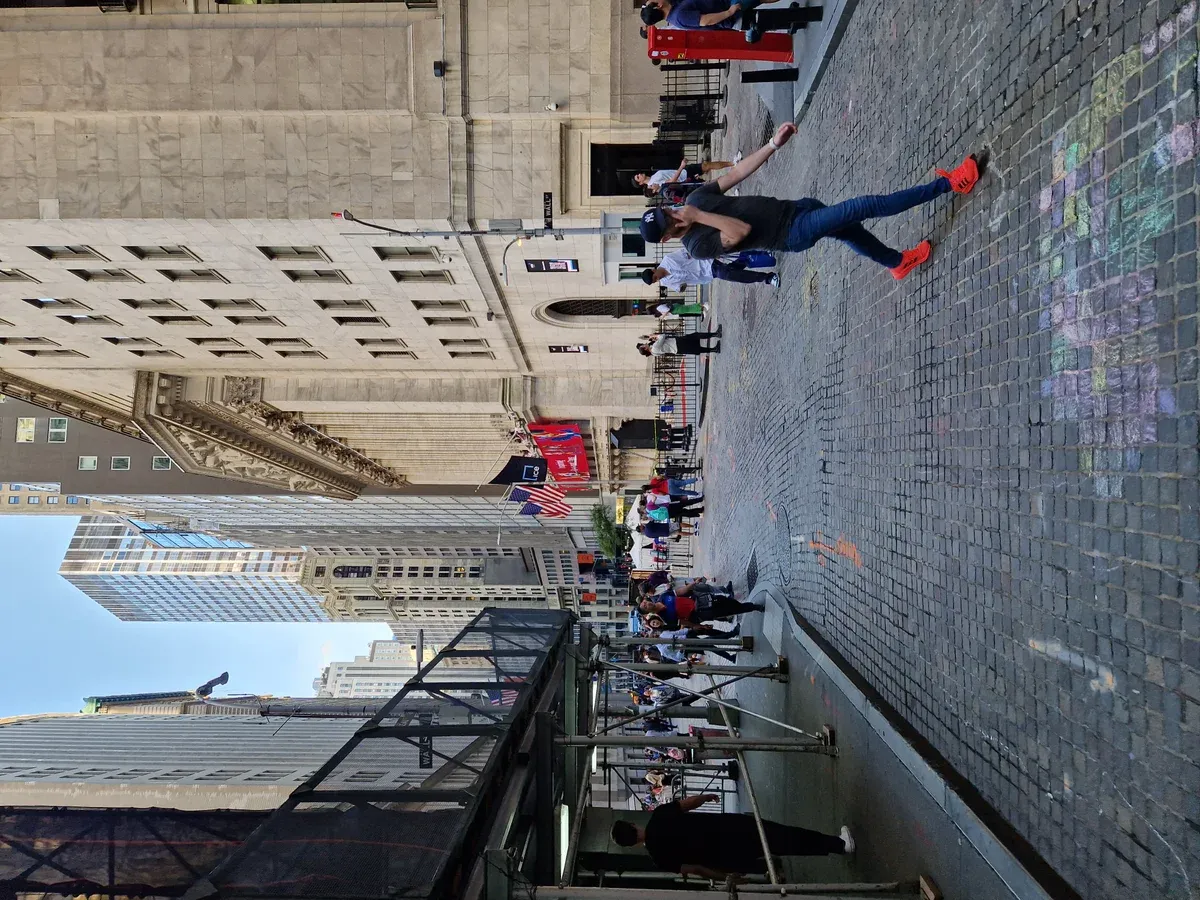
Walk north on Broad Street to Wall Street.
Wall Street takes its name from the wooden wall the Dutch built in 1653 to protect the northern edge of New Amsterdam. The wall was torn down in 1699, but the street name stuck.
The New York Stock Exchange at 11 Wall Street is the largest stock exchange in the world by market capitalization. The building with the six Corinthian columns was completed in 1903. The trading floor inside is closed to the public, but you can see the Fearless Girl statue in front of the building, moved here from Bowling Green in 2018.
Wall Street itself is narrower than you’d expect, lined with tall buildings that block most of the sky. It’s a photo stop, not a place to linger.
6. 40 Wall Street
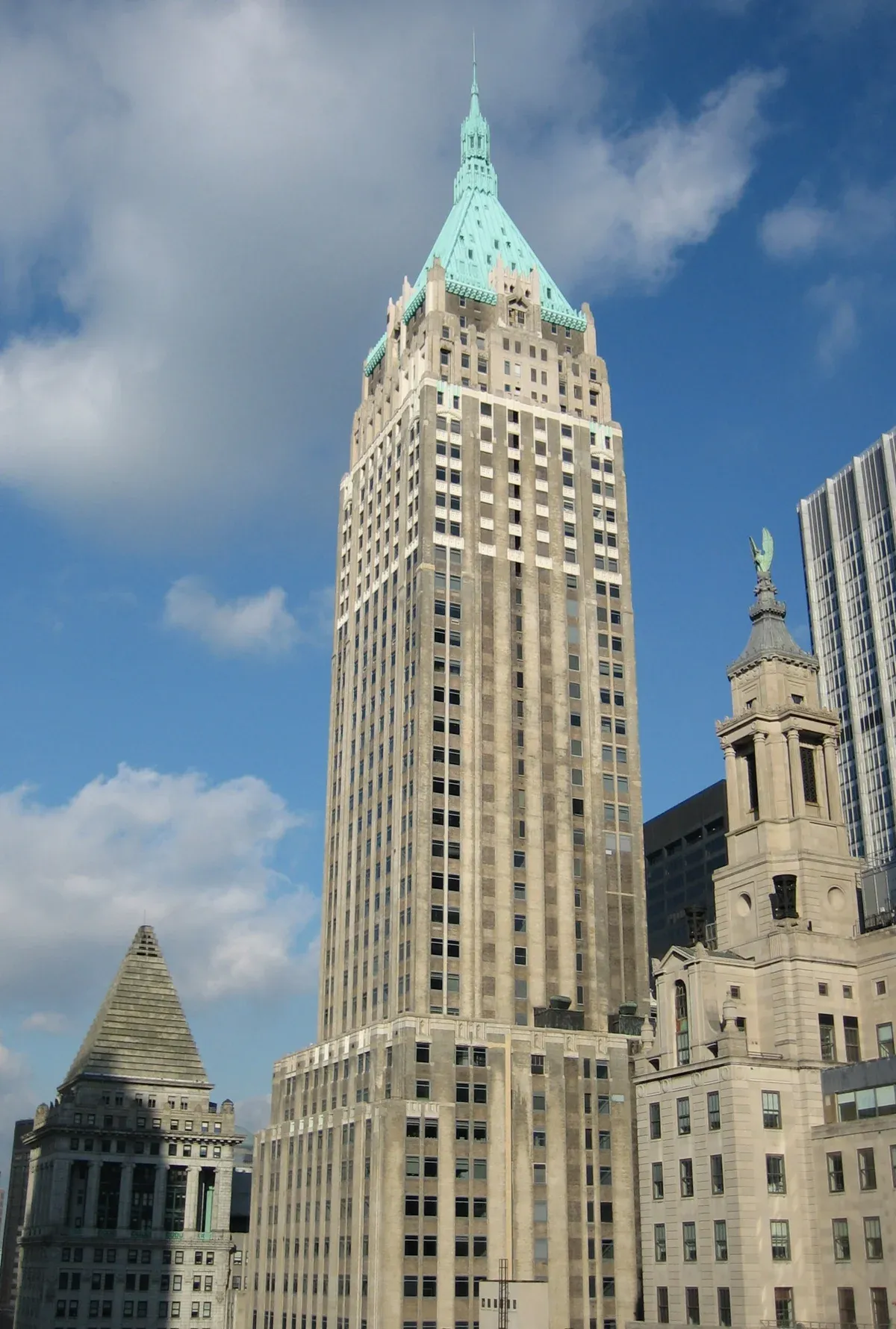
Walk east on Wall Street to 40 Wall Street, the Art Deco skyscraper on the south side of the street.
40 Wall Street was completed in May 1930 as the tallest building in the world, rising 927 feet. It held the title for less than two months before being surpassed by the Chrysler Building.
The building was designed by H. Craig Severance in the Art Deco style, with a pyramidal green copper roof and a facade of Indiana limestone. The lobby, with its vaulted ceilings and marble walls, is open to the public during business hours. Walk in, look up, and walk out. It takes two minutes.
The building is now known as the Trump Building, after a 1995 purchase, but the address remains 40 Wall Street.
7. Federal Hall
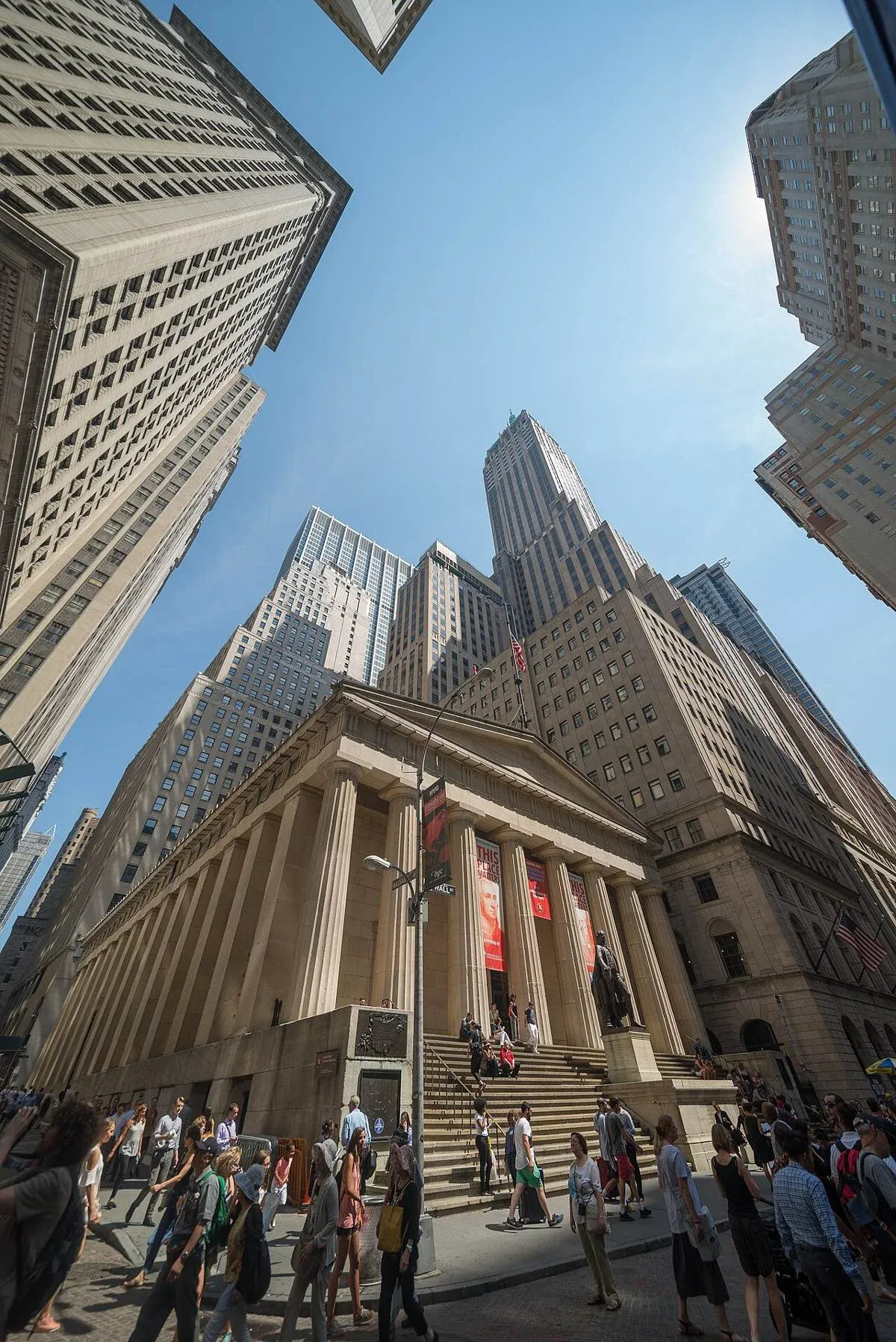
Walk back west on Wall Street to 26 Wall Street, across from the New York Stock Exchange.
Federal Hall is where George Washington took the oath of office as the first President of the United States on April 30, 1789. The original building, New York’s City Hall at the time, was demolished in 1812. The current Greek Revival building was completed in 1842 as a U.S. Customs House and later served as a sub-treasury.
The statue of Washington on the front steps was installed in 1883, sculpted by John Quincy Adams Ward. It marks the approximate spot where Washington stood during the inauguration.
Federal Hall is now a National Memorial and museum, operated by the National Park Service. Admission is free. The rotunda inside is worth a quick look if the building is open.
8. Trinity Church
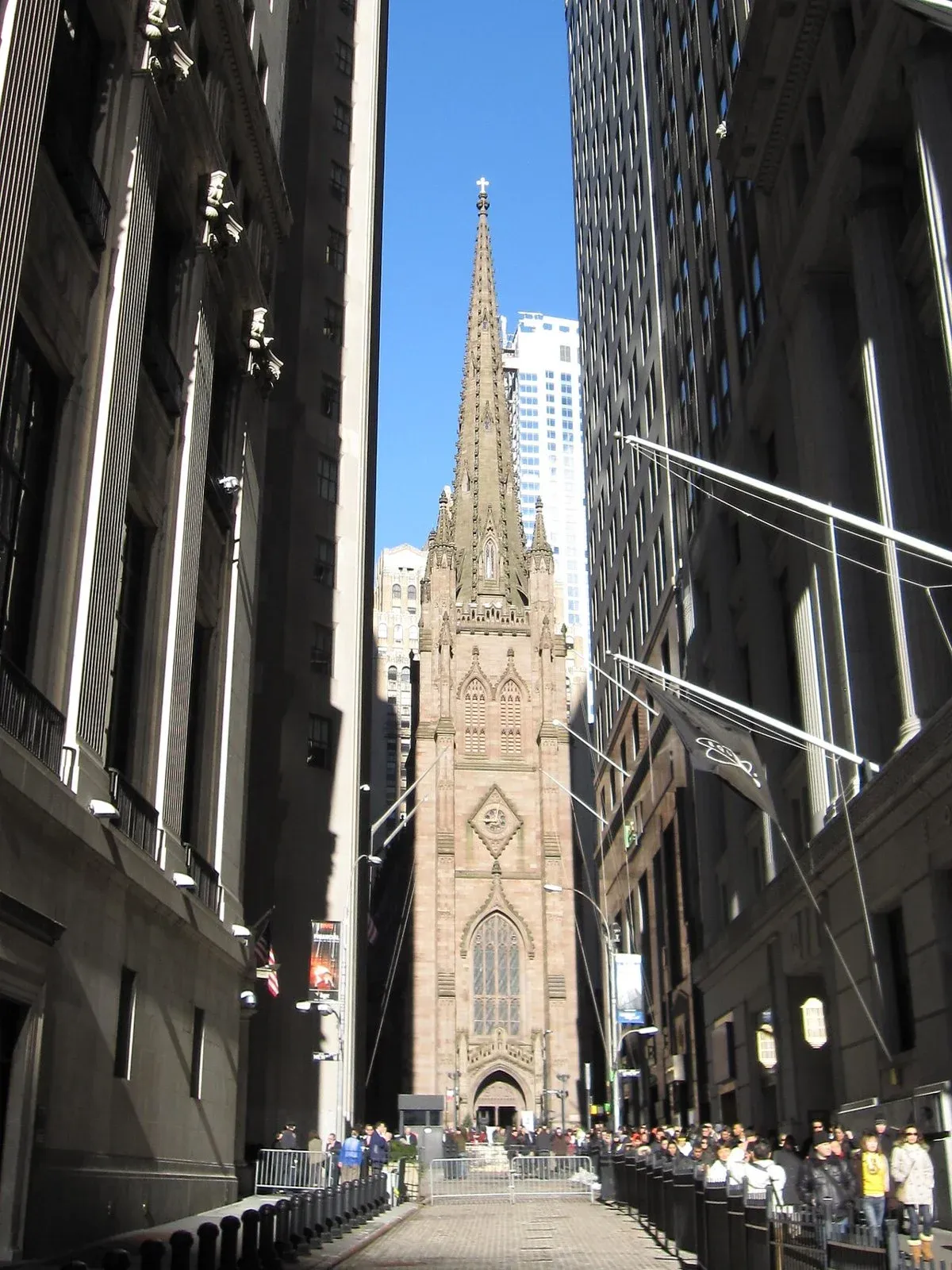
Walk west on Wall Street to Broadway. Trinity Church sits at the head of Wall Street, where the street meets Broadway.
Trinity Church was founded in 1697, but the current building is the third on this site, completed in 1846. The Gothic Revival design by Richard Upjohn made it the tallest building in the United States until 1890, when it was surpassed by the New York World Building.
The churchyard is where Alexander Hamilton, Robert Fulton, and several other notable New Yorkers are buried. Hamilton’s grave is near the south side of the church, marked by a simple stone monument. The churchyard is open to the public, free, and quiet.
If the church is open, walk in. The interior is dark, soaring, and filled with stained glass. It’s a pocket of calm in the middle of the Financial District.
9. St. Paul’s Chapel
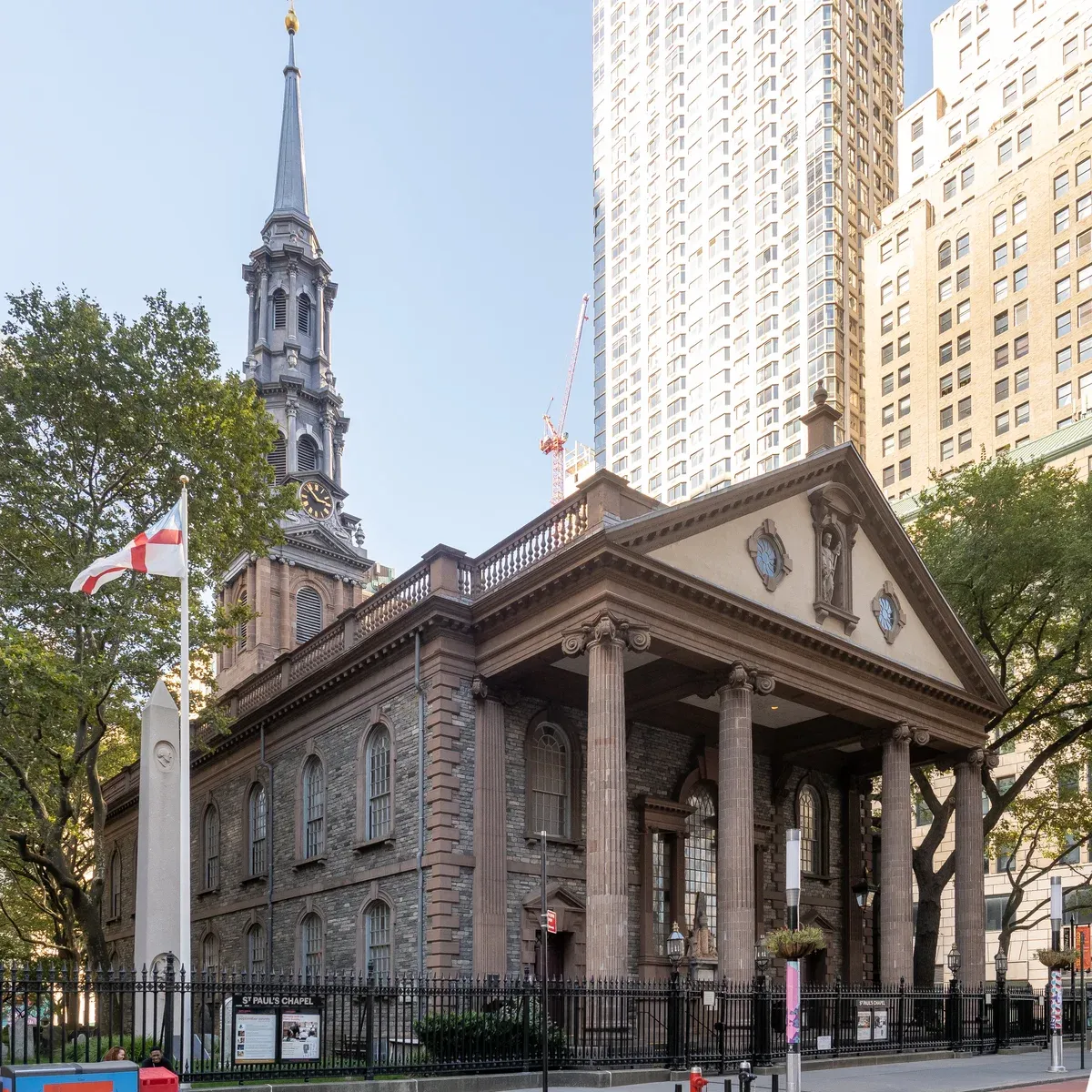
Walk north on Broadway to St. Paul’s Chapel at 209 Broadway, between Vesey and Fulton Streets.
St. Paul’s Chapel was completed in 1766, making it one of the oldest surviving church buildings in Manhattan. George Washington worshipped here on Inauguration Day in 1789, and his pew is preserved inside the church.
The chapel sits directly across from the World Trade Center site. On September 11, 2001, the chapel became a refuge for rescue workers. The building was not damaged, despite being less than 100 yards from the towers. For months after the attacks, the chapel served as a round-the-clock relief center, providing food, rest, and counseling to first responders.
A permanent exhibition inside the chapel documents its role in the recovery effort. The churchyard behind the chapel is open and offers a quiet place to sit. Admission is free.
10. National September 11 Memorial
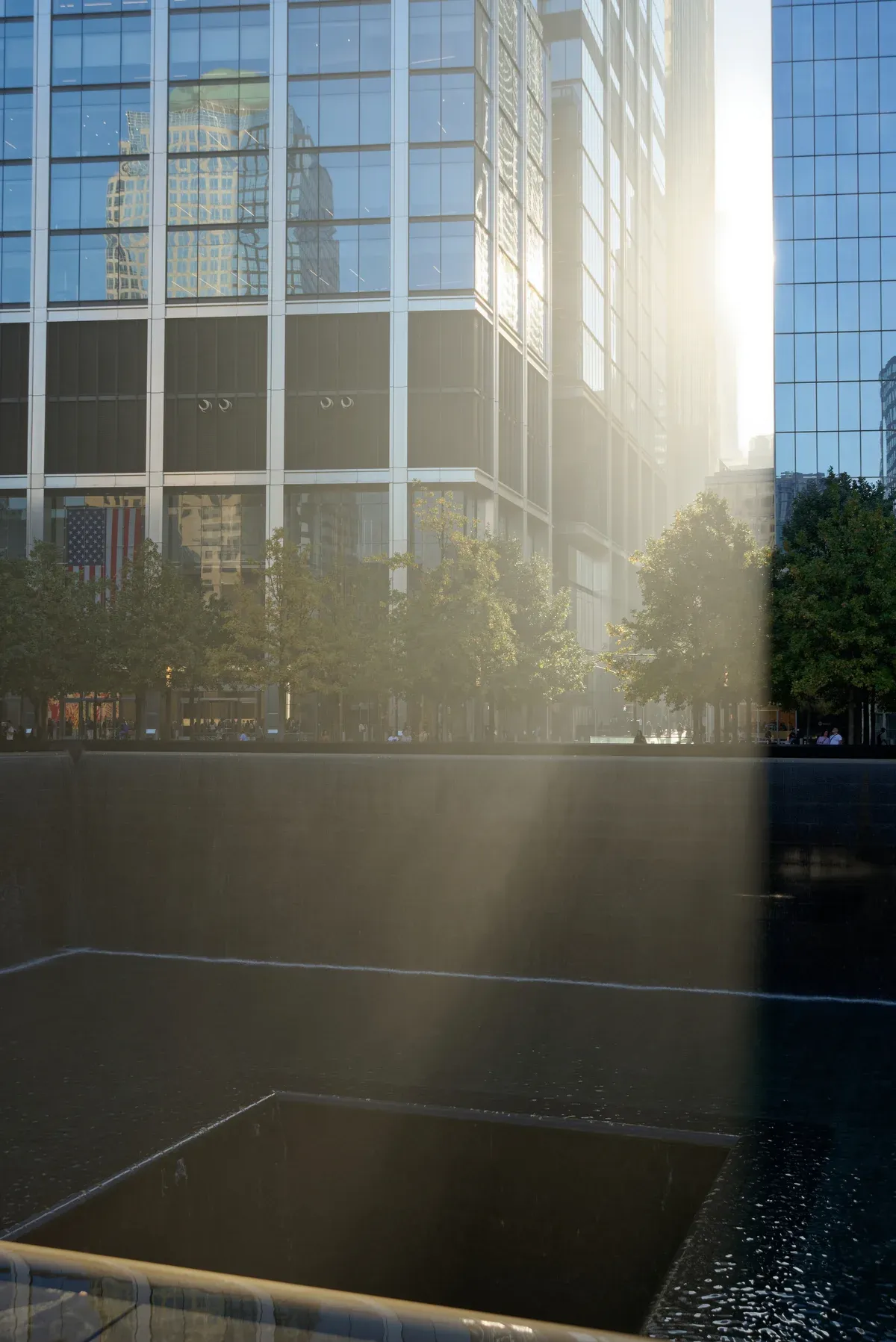
Walk west on Vesey Street to the National September 11 Memorial at 180 Greenwich Street.
The Memorial opened on September 11, 2011, the tenth anniversary of the attacks. Two square reflecting pools sit in the footprints of the original Twin Towers. The pools are each nearly an acre in size, with waterfalls cascading 30 feet down into a central void.
The names of the 2,977 people killed in the September 11 attacks and the six people killed in the 1993 World Trade Center bombing are inscribed in bronze parapets surrounding the pools. The names are arranged in a meaningful adjacency system, placing people near others they worked with, knew, or requested to be near.
The Memorial is free and open to the public. The adjacent 9/11 Museum charges admission and is worth visiting if you have time. The Museum’s collection includes artifacts from the attacks, oral histories, and a timeline of the day.
Take your time here. This is where the walk ends, and it’s where the weight of the Financial District’s most recent history sits.
What I’d Skip
Every guide tells you what to see. Almost none tell you what’s not worth the trouble. Here’s what I’d walk past.
The Oculus mall. It’s architecturally striking, but it’s a shopping mall. Walk through if you’re curious, but don’t budget an hour for it unless you need to shop.
Stone Street on a weekday lunch. The cobblestone street is charming, but the outdoor seating gets mobbed during lunch hours. Come for dinner or drinks instead.
The One World Observatory. The view is good, but the ticket price is high and the lines are long. If you want a view, go to Brooklyn Bridge Park or the Staten Island Ferry instead.
Where to Eat Along the Route
Three spots, in the order you’ll pass them.
-
Fraunces Tavern (54 Pearl St) for a pint and a burger. Historic setting, decent food, no reservations needed for the bar.
-
Stone Street (between Whitehall and Hanover Square) for outdoor seating and a drink. Cobblestone street, European feel, best in the evening.
-
Eataly NYC Downtown (4 World Trade Center) for Italian food and coffee. Multiple counters, fast service, near the 9/11 Memorial.
Practical Tips
Best Time of Day
Weekday mornings are quietest for photos and walking. Weekends are less crowded overall, as most office workers stay home. Avoid weekday lunch hours on Stone Street and near the NYSE.
Best Season
Spring (April to June) and fall (September to November) are ideal. Summer is hot and the skyscrapers block most of the breeze. Winter is fine if you layer up; the streets are less crowded.
Rain Plan
Most of the route is outdoors, but you have indoor options at each stage. Trinity Church, St. Paul’s Chapel, Federal Hall, and the 9/11 Museum all work as rain breaks. Bring a compact umbrella.
Accessibility
Most sidewalks on this route are flat and accessible. The 1 train at South Ferry and the 4/5 at Bowling Green both have elevator access. The 9/11 Memorial is fully accessible.
With Kids
The 9/11 Memorial is solemn and worth bringing older kids to. The Charging Bull is a quick photo stop. Skip the churchyards and Federal Hall unless your kids are interested in history.
Getting There
Take the 1 train to South Ferry or the 4/5 to Bowling Green. From Midtown, the trip takes about 15 minutes. Exit onto Battery Park and you’re at the start.
What to Wear
Comfortable walking shoes. The route is mostly flat, but you’ll be on your feet for two hours. Layers are smart in spring and fall.
Restrooms
Public restrooms are scarce. The 9/11 Memorial has restrooms near the entrance. Starbucks locations on Broadway and any of the restaurants on the route will let customers use theirs.
Take This Walk with Audio
You’ve got the route. You know the stops. But reading about a place and hearing its story while you’re standing in it are two different things.
The Financial District audio walk on Escapade is narrated by a local creator who knows these streets. At each stop, you get the history, the context, and the details that don’t fit in a blog post.
The route is flexible. Skip stops, reorder them, go at your own pace. No group to keep up with, no schedule to follow. Just you, your headphones, and the neighborhood.
Nearby Neighborhoods
SoHo sits north of Chambers Street, with the same cast-iron fronts that start downtown. Greenwich Village is farther up Broadway. The Lower East Side is northeast, past the Seaport. The East Village is north of Houston if you keep walking. All four connect naturally to this route.
See also: Self-Guided Walking Tours in NYC
Frequently Asked Questions
How long does a Financial District walking tour take?
Plan for 2 hours if you stop at each landmark. Walking the route without stops takes about 60 minutes.
What are the best things to do in the Financial District NYC?
Wall Street and the NYSE, Charging Bull, Federal Hall, Trinity Church, St. Paul’s Chapel, and the National September 11 Memorial. All of them are on this route.
Is the Financial District open on weekends?
Yes. Most landmarks are open seven days a week, though Federal Hall and some churches have limited weekend hours. Check before you go.
Where to start a Financial District walk?
Castle Clinton in Battery Park, at the 1 train stop at South Ferry or the 4/5 at Bowling Green. It’s the southern tip of Manhattan and sets you up to walk north through the best blocks.
Can I visit the New York Stock Exchange?
No. The NYSE trading floor is closed to the public. You can see the building from the street and take photos with the Fearless Girl statue in front.
Is the 9/11 Memorial free?
Yes. The Memorial is free and open to the public. The adjacent 9/11 Museum charges admission.
What is the oldest building in the Financial District?
St. Paul’s Chapel at 209 Broadway, completed in 1766, is one of the oldest. Fraunces Tavern at 54 Pearl Street dates to 1719 and is one of the oldest buildings still standing on its original site.